Tag: Review

  • Absolum – Review

    Absolum – Review

    Rogue-likes have a certain kind of magic to their design: this stationary threat at the end of the road that sits, patient and menacing, for you to walk into its lair and claim victory over the game’s greatest challenge. The final boss in a rogue-like is often the thing you think about the most, and actually encounter the least. In a game like Nightreign, you plan which locations to strike and what kind of build to work toward based on your knowledge of the Nightlord you’ll be facing at the end of the cycle. In Hades, you repeat the path through the rest of the game so frequently and with such speed that you can reach a flow state wherein you start thinking less about what’s happening in the immediate present and more about how everything you’re doing is going to save or condemn you later on. Hades himself is at the end of the line no matter what, so it’s best to have a plan. Through a more narrative-centric lense, The Binding of Isaac puts the game’s primary antagonist not only at the heart of the game’s loop but at the heart of its story. Mom is a vicious, unpredictable threat in the literal text of the game and in the ways that the runs themselves are so incredibly chaotic and deadly.

    These are games that really test the player, forcing you to repeat sections over and over and over again, to grind your blade to dust against the bosses until you break through just once, then again, and then again to the point of it being a foregone conclusion. They are often brutally difficult and punishing to those who do not think tactically, but by necessity they need to be pleasant to look at, hear, and play because the nature of the game demands an incredible amount of repetition.

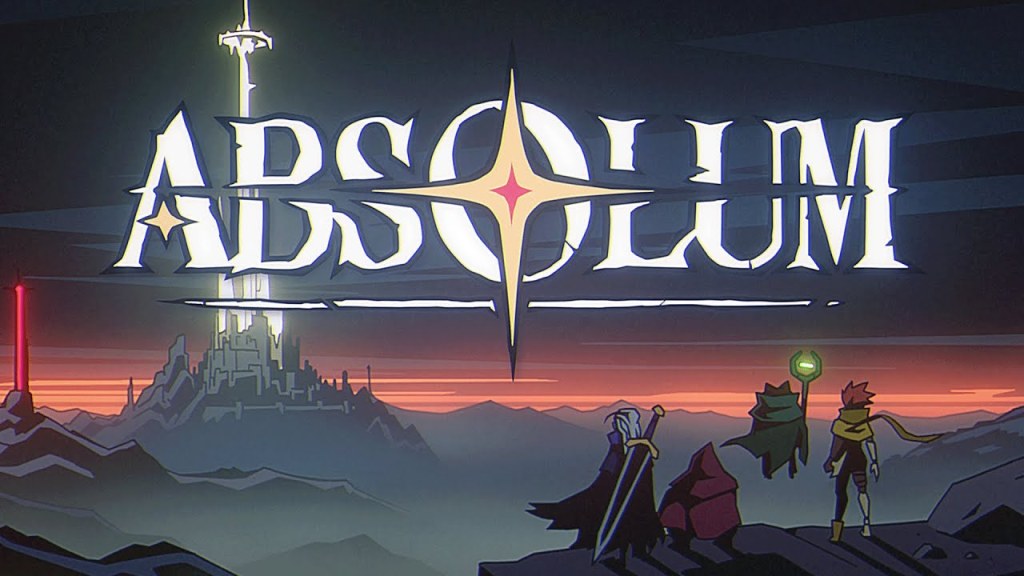
    So along comes Absolum, a fantasy beat’em up rogue-like from developer Dotemu, and a game that not only understands the concept of the “run”, but heightens the enjoyment of each run to a degree I haven’t felt in a long time within the genre.

    There is so much about this game that brings me immense joy, from the intense and driving soundtrack (with a few extremely catchy tracks), to the delightful aesthetic that calls to mind various fantasy comics and cartoons, and the deep wealth of randomized and systematized events which can curve a run in unique directions or give the player special goals to try and achieve.

    Perhaps most noteworthy is the option to use what is called the “Active Assist” mode. This function allows you to raise or lower the amount of damage each player both outputs and receives, meaning that if you just want to goof around and experience the story you can drop the threat all the way down to zero and just have fun. The game features online and couch co-op, and Active Assist can be set to effect the players to different degrees for a truly custom experience.

    Absolum takes place in a somewhat typical fantasy setting: a vast and magical land overtaken by the shadowy forces of an evil ruler, this time being Azra the Sun King. Each run, you pick from between your available characters, select a special move, and set off on a quest to defeat two of Azra’s top soldiers before storming the capitol. You know, assuming you make it that far.

    What makes each run special is the amount of variety. Not only are there multiple branching paths to take on your journey (the first phase of the game offers almost a dozen unique combinations of levels to reach the first major boss) but with subsequent runs, new paths will open up and new events will play out in levels you’ve already passed through. One of the early levels is a dense forest full of scarlet trees and a horde of goblins to fight your way past. Standard fare, yes, but once I’d gone through it two or three times, an NPC pointed out that a new path had been cleared away by some loggers and a secret level was unlocked. Excited and intrigued, I took that path and found an alternate route to the Underking, the first of Azra’s most loyal subjects. Pretty neat on its own, but what really sealed the deal was that when I came back on another run through the secret level, a new NPC appeared with a special side-quest that took us to new parts of the level with some fun secrets to be found.
    It was, in a word, delightful. And if I had to pick one word to describe this game, that’s what I’d go with: delightful.

    There are so many secrets to uncover, new characters to unlock, skills to master, alternate routes and random events that’ll mix things up in exciting ways. Perhaps most important for Dotemu to nail was the combat (I mean, it’s what you’re doing basically the entire time) and nail it they most certainly did. Combos flow nicely together and characters feel agile and strong. Launching enemies into the air before unleashing a series of aerial attacks makes you feel like a god. Gaining a power that spawns throwing daggers when you successfully deflect an enemy attack and then hurling those daggers at your foes like an M60 machine gun at full force is one of the greatest beat ‘em up experiences I’ve ever had. Take into account that the Active Assist function lets you increase and decrease the difficulty to fit your preferences and this game oozes satisfaction.

    Perhaps my only real criticism is that it is occasionally a little buggy. I encountered two rather nasty glitches in my time with the game, one being when a group of chickens launched my character into the air and suddenly the framerate dropped to about 2 per second and it couldn’t seem to recover. On another occasion, talking to one of my other characters in the game’s central hub opened a dialogue box that was completely empty and impossible to escape, resulting in me having to reload the game. I didn’t lose any progress, but I can’t shake the feeling that I might be missing out on one of the few hidden questlines I have yet to unlock.

    The few nitpicks really aren’t worthy of much discussion though. Playing this game co-op is a frenetic rush, and the pure tactile joy of fighting through hordes of enemies was enough to keep me coming back until I snagged that platinum trophy. Not to mention, the game is nowhere near the cost of big releases, so there’s really no excuse not to make what will likely make my top ten games of the year.

    Absolum is, in essence, the primary reason why we play games. It’s just so damn fun.
  • Cronos: The New Dawn – Review

    Cronos: The New Dawn – Review

    Survival-horror games live and die by the tightness of their balance. You can never have too many resources, too much ammo, or too many healing items. You need to be teetering on the edge of having nothing or having just barely enough to get through each area. Every encounter should have you tense, grappling with the stress of making every decision count for something, because a few wrong moves and it all comes crashing down around you.

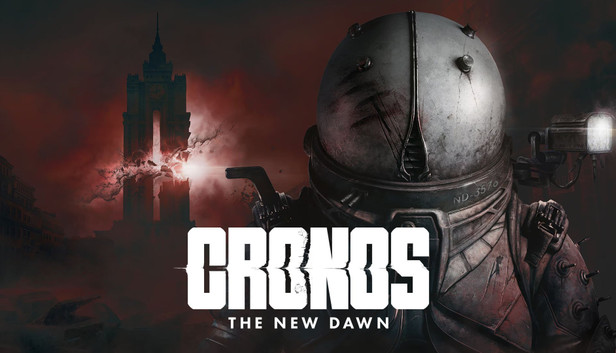
    So it is a genuine achievement that Cronos: The New Dawn absolutely nails this balance, giving me one of the most stressful survival-horror shooter experiences I’ve had since Resident Evil 2: Remake. The inventory size is just tight enough that you’re almost always making tough calls about what to bring with you when you leave the comfort of a safe zone. You always have either enough money to get those weapon upgrades you desperately need, or that ammo you might not be able to survive without. Even the times when you enter a combat encounter feeling well-stocked and ready to take on a legion of baddies, a few seconds in you’re left panicking. Every missed shot might as well have leapt out of the TV and hit you in the gut. The game simply works in the ways it gives you that sensation of always being on the knife’s edge, of never getting too comfortable. One of the most effective ways that Cronos makes you have to strategize is tied in to what some might call its primary “gimmick”.

    To give some context, the hordes of monsters you’ll be killing in this game are Dead Space necromorph adjacent creatures that are part of a shared collective mind: a massive hive of living flesh and memory that mindlessly devours all life it encounters. When you manage to down one of these creatures, tentacles amass around the corpse and tie it down, an eerie and almost protective gesture. Now, you might want to remember where that corpse is. Because the remaining enemies know, and they want it, they need the flesh and muscle of the lifeless body to be reintegrated, reabsorbed. The creatures will seek out the corpses of their fallen and unless you can interrupt them or burn the bodies, monsters will merge the dead creature into their own bodies and become significantly more dangerous, sometimes even gaining new abilities like hardened chitinous plating or the capability to spit acid. Flamethrower fuel is another resource you’ll always be hurting for, so there is a constant question of “Should I torch these bodies in case new enemies show up? Or should I just try to efficiently dispose of new threats before they can merge?”

    It’s a relentless threat, this ability of theirs. Monsters that do manage to merge can quickly overwhelm you if you’re not careful, their own resilience increasing in tandem with their ability to do harm. For what sounds like a simple trick, it’s remarkably effective in reinforcing the themes of the game’s narrative and the strategic aspects of the gameplay.

    To top that off, the game oozes a dark sci-fi atmosphere evocative of games like Dead Space, Callisto Protocol, and (oddly) Destiny. Unsettling gurgling comes from the sludgy masses of merged flesh around every corner. Bodies of enemies lie lifeless in the halls… until they get up. A pretty stellar soundtrack of eerie synths and haunting choral music heightens the experience by a wide margin, and we have a new entry on the list of all time great save room themes.

    Perhaps my favorite part of the game (and this will sound strange, I know) is the way that the protagonist moves. From the jump, you get the sense that this is a person whose sole motivation is the efficient and effective completion of their mission, so it is a great bit of characterization that they move stiffly, heavily, and when taking hits from big enemies the weight of their armored suit sends them stumbling awkwardly to the ground. The sound design emphasizes each gesture, each instance of your heavy boots hitting the concrete, the dirt, the muck. All of it sounds so weighty and full that you really get the feeling of being an armored soldier on the march through dangerous territory.

    It’s clear from Bloober Team’s history that they are big fans of survival-horror, and when fans of a thing make their own version of it results tend to vary widely. Speaking from experience, there’s a pretty big gap between loving a thing and understanding why and how it works. What’s also clear is that Bloober does understand why these games work on a design level.

    Perhaps the only real critiques I have are with the game’s story. While it starts out with a tantalizing air of mystery and terror, by the end I was starting to lose the plot a little. I stopped being able to follow what everyone was talking about, and a lot of the more intriguing aspects of the setting were sort of left behind, mostly ignored or backgrounded for the purpose of focusing on a tighter narrative about a few key characters. Unfortunately, I found the story to be oddly flat without these more interesting elements being in the forefront, and the ending to the game left me feeling a little disappointed, even though the final boss fight was very fun and flashy.

    Cronos: The New Dawn doesn’t manage to leave as strong of a lasting impression as I would’ve hoped for, but it’s a truly thrilling game to play that looks, sounds, and feels exactly the way it ought to, and should a sequel arrive in the future I know I’ll be there to take another dive.

  • The DNF Report – Ni No Kuni

    The DNF Report – Ni No Kuni

    There are many reasons not to finish a game. For working adults like myself, free time is a luxury I can rarely afford, and I’d rather spend it playing a game that is interesting or exceptionally fun than one that isn’t really grabbing me. In other cases, a game can simply fail to entertain me at all, or can even go so far as to leave me irritated, frustrated, or disappointed.

    Or maybe I once tried getting into a gacha game and watched hundreds of dollars slip from my bank account before I grabbed hold of the emergency release lever and deleted the game, and now I have to live in fear of micro-transactions or other exploitative practices prevalent in the industry, sometimes starting to play whatever new, flashy game comes out only to run in abject terror the first time it asks you to pay $10 for blupee gems or bing-bong crystals.

    Just as a general example.

    Here on The DNF Report (DNF standing for Did Not Finish), I seek to work through why certain games fell apart like sand in a windstorm, losing my attention and ending up on the pile of games whose endings I will never reach.

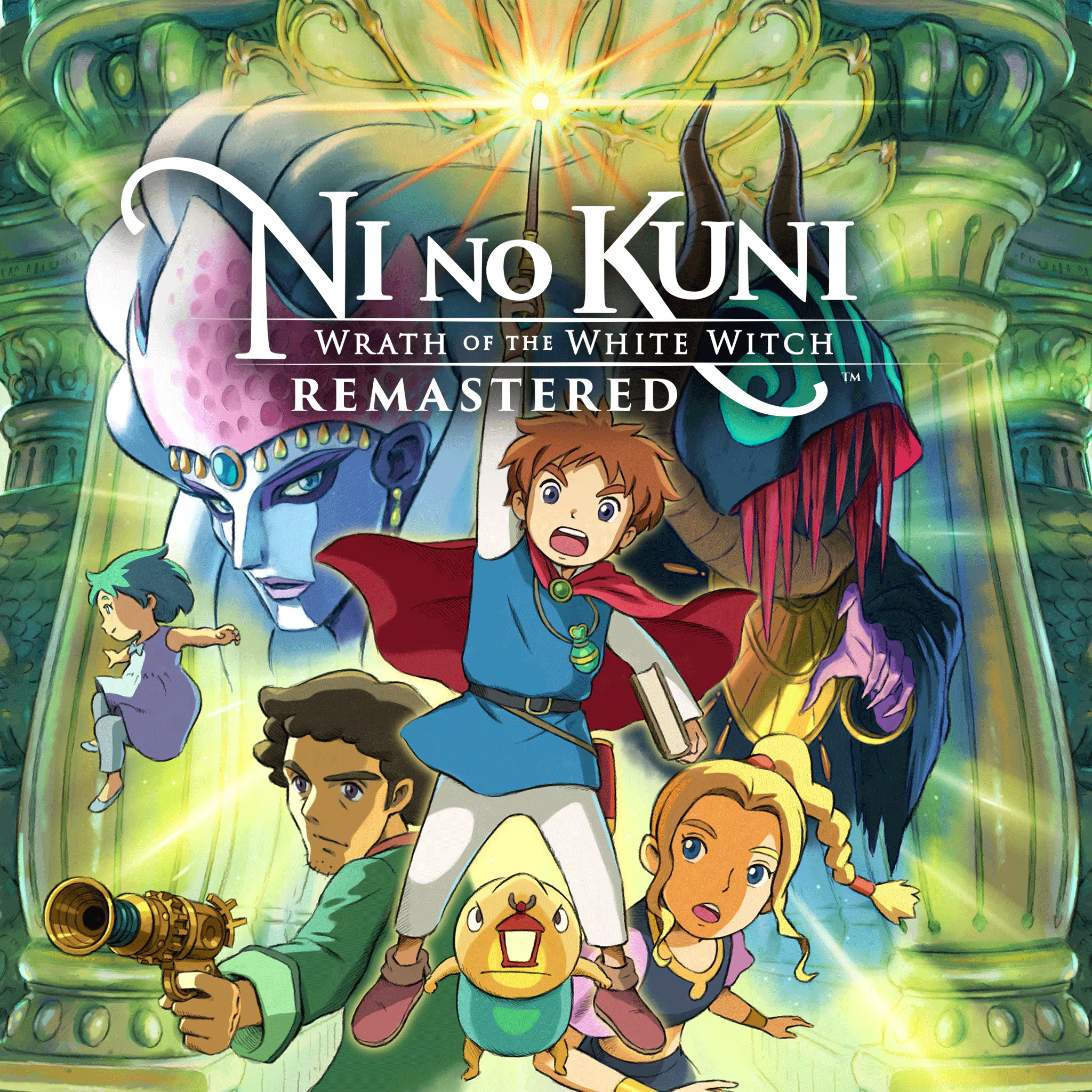
    To inaugurate this new series, let’s take a look at my most recent DNF, Ni No Kuni: Wrath of the White Witch.

    This game has been out for several years now, but I somehow remained mostly unaware of the specifics. I knew the big selling point: that the art and many cutscenes were lovingly designed in collaboration with the highly acclaimed Studio Ghibli, famous for such movies as Spirited Away and Howl’s Moving Castle. I was also vaguely aware going in that it was designed in the style of classic Japanese RPGs.

    What I didn’t know, importantly, is that it is boring.

    There’s something to be said about what it means to be a game “for kids” in the modern era, where games designed to be appealing to kids are often full of collection plate passing tactics like custom skins, battle passes, gacha pulls, etc. These games tend to be flashy, aimed at producing the most consistent dopamine hits that the medium can offer, and fast-paced to prevent kids from getting bored. And while Ni No Kuni is most definitely a game that seems eager to appeal to children, it is shockingly dull and slow-paced.

    The game’s basic premise is very familiar. A young boy in a humble town embarks on an adventure to magical world living in parallel to his own, guided by a jovial companion (in this case, a smart-mouthed fairy named Drippy), whereupon he fights monsters, an evil sorcerer, and teams up with additional allies he encounters along the way. There is a lot of charm in the early hours of the game, from the pleasant visuals to the inoffensive (but certainly insignificant) music which evokes a sort of classic ideal of fantasy stories for children. Characters tell jokes, there are anthropomorphic animal folk, and the action of combat is bloodless and cartoonish.

    It’s also, despicably clunky.

    You never feel like you have enough time to react to the attacks of enemies, as combat is set in a strange combination of active time and turn-based styles that more often than not leaves you on the back foot, reacting instead of pushing the enemy into a corner and committing to attacks that often leave you vulnerable to a swift pummeling. To summarize, the members of your party can fight as themselves, or send familiars to fight in their place. These familiars are admittedly charming in their visual design, evoking a sort of Pokemon/Digimon sort of style, and they function similarly to the monsters in those games, having elemental weaknesses and resistances, a set number of special movies to use in combat, and even evolution paths that change their form and grant them new abilities. The familiars are the same monsters you fight on your journey, but a random roll upon defeating a monster can grant you the opportunity to claim them for your party’s collection.

    When I first encountered the familiars, I was sort of surprised. I hadn’t expected this kind of gameplay, but I was open to it and kind of interested to see what the different monsters would play like.

    It didn’t take long to find out that the system is needlessly complicated and clumsy. You have to feed them to up their stats, with specific kinds of food granting specific upgrades. But don’t feed them too much or they get full and can’t eat anymore! And don’t raise their abilities with food too far, because there is a hard limit to how much they can increase their stats! And don’t let them get stronger without evolving them because they drop back to level one when entering a new form, leaving them almost always weaker than they were before with the promise of long-term benefits, benefits that never feel meaningful because you are (most likely) continuing to advance through the game and therefore encountering harder and more dangerous monsters that will wallop on your poor little under-leveled creatures with precision and brutality.

    And there are hundreds to collect but your party members can only hold 3! And for some reason, THEY ALL SHARE THE SAME HEALTH AND MANA. This means that if you send one familiar out and find that they’re getting absolutely stomped by the enemies you’re fighting, you have no recourse but to use items or spells to heal before you can switch to another creature, but that mana could have been better used on the other familiar if you had sent them out in the first place.

    Battles are also more often than not unavoidable, and enemies work with much more focus and aggression than you (and certainly more than a child for whom this might be their first RPG) can manage with the clumsy controls and interface.

    The story does even less to keep the player interested. The problems your party must solve are often connected to one of the game’s main antagonists only in a vague way, and the only real thread tying the events of the game together are the machinations of the aforementioned White Witch, whom you get remarkably far into the game before learning ANYTHING about. The dungeons are boring and might as well be gray hallways for as fun as they are to traverse.

    And I unfortunately got very far into the game before finally reaching the conclusion that it wasn’t going to suddenly get better. For all of protagonist Oliver’s magical acumen, he couldn’t make the game entertaining.

    He also can’t move at higher speeds than a brisk walk. Oliver, I have to work tomorrow! MOVE!!