Tag: horror

  • Recency Bias Volume 5

    Recency Bias Volume 5

    Greetings, boils and ghouls! Welcome to a spoooooooky installment of Recency Bias wherein are found the thrillingest, chillingest, most terrifying…

    OK, I enjoyed some spooky stuff these last few weeks and now I’m going to talk about them.

    <Lightning crashes, a raven cries, a banshee shrieks in the distance>

    Yeah.

    Crow Country

    As I stated in previous posts this month, I’m a relative newbie to survival horror, but it’s a genre I’ve already gained a lot of love and respect for. I spotted Crow Country on The Sphere Hunter’s Youtube channel, where she covers a lot of survival horror classics (I highly recommend her channel!). About a minute or so into the video I closed it and realized I needed to try the game for myself. I added it to my Steam Wishlist with the full intention of buying it when I got my next paycheck.

    Then, I forgot about it. ADHD is really cool like that!

    So imagine my surprise and excitement when I was browsing the Playstation Store the other day and came across Crow Country once again, this time for free to PS Plus members like myself. No brainer. I installed it, played it, and ended up marathoning the game all the way to the end in a single 5 hour session.

    And what an awesome Halloween treat this game is! With a visual style inspired by the blocky, dozen or so polygon based characters of yesteryear (think FFVII)the game perfectly rides the line between fun and spooky. The majority of monsters are genuinely creepy, but when downed by your expert marksmanship they fall flat with a heavy and, frankly, quite funny thud. The interfaces are very reminiscent of early Resident Evil titles as well, in what feels like a great homage rather than a punchline.

    The game is balanced really well, with some tougher and more stressful encounters that’ll test your reflexes, but lots of tricks and ways to get an edge such as the ability to use certain environmental hazards and traps against your enemies rather than stumbling blindly into the fifth trap you’ve been injured by in this one area alone. Hypothetically speaking, of course. There are also quite a few puzzles that are fairly simple and satisfying to solve as well as more challenging ones. This is a break out the notebook type game at times, and I love it for that.

    It also has the option to play on a much easier Exploration Mode if you’re looking for vibes but none of the survival horror stress, and plenty of secret unlockables to reward diligent exploration and repeat playthroughs, and the brief runtime means that you will likely want to go through Crow Country multiple times.

    This was a fantastic game for Halloween season, and I couldn’t recommend it more to casual and longtime fans of the genre alike.

    Until Dawn (Film)

    Sometimes a movie can creep under your skin, and settle in your bones like a bitter winter breeze. You leave the film haunted by its images, its implications; unsettled by the darkness you never imagined could be thought up by mortal beings.

    And sometimes you point at the screen and say, “Ha ha. Look at those hot twenty-somethings get murdered.”

    Until Dawn (which has so tenuous a connection to the video game its apparently licensed from that to call it an adaptation would be a pretty major stretch) is the latter. It is a mindless, empty calorie type of film wherein attractive young people get brutally slain often and repeatedly thanks to a time loop, the one interesting thing about the movie.

    Well, that and the tap water scene.

    While there are moments of genuine schlocky horror joy to be found, Until Dawn is also ruthlessly unimaginative, frighteningly dull, and horrifically under-baked, leaving the impression that this is what it might look like if you made gumbo out of every January release horror film of the last decade.

    Still, the “water wall” joke is an all-timer.

    Tender is the Flesh by Augustina Bazterrica

    I tried to read this book several years ago. I failed to finish it, and not because it was poorly written (it’s not) or because it fails to tell an interesting story (it succeeds at telling a deeply fascinating one), but because it is the exact type of horror that scares me most: dehumanization.

    I love a good monster flick, and ghost stories are a delight (hell, I’ve read so much Stephen King that I have a whole three shelves devoted to him like a half-hearted shrine), but what truly gets my heart racing, my palms sweating and each breath labored is the repulsive ways in which real human beings are so easily and readily able to depersonalize one another.

    Bazterrica’s novel tells the story of a near future world in which a deadly virus has infected all of Earth’s animals making the slightest contact potentially lethal. To combat the virus, all animals are exterminated from the planet and in the wake of this event, what industry ends up with a pretty big crises on their hands?

    The meat production industry, of course.

    No longer able to breed, raise, slaughter, prepare, package, and sell meat products, the industrious leaders of many corporations begin to sell “special meat”, meat made from human beings bred and raised as cattle only to turned into food for a protein starved world.

    The book is deeply critical of the ways capitalism turns back on those who live beneath it, stripping them of identity, complexity, and individuality to become either machines of industry or another kind of commodity. It is most frightening not only because the premise is so sickening (and explored in such thorough detail that the memory of certain passages is enough to make my stomach churn) but because the metaphor is so thin that one cannot help but be forced to reckon with its implications, with its suggestions, and with its bared teeth accusations aimed directly at the reader.

    I finished “Tender is the Flesh” this time. And I don’t think it’ll ever truly leave me.

    And that is true horror.
  • Cronos: The New Dawn – Review

    Cronos: The New Dawn – Review

    Survival-horror games live and die by the tightness of their balance. You can never have too many resources, too much ammo, or too many healing items. You need to be teetering on the edge of having nothing or having just barely enough to get through each area. Every encounter should have you tense, grappling with the stress of making every decision count for something, because a few wrong moves and it all comes crashing down around you.

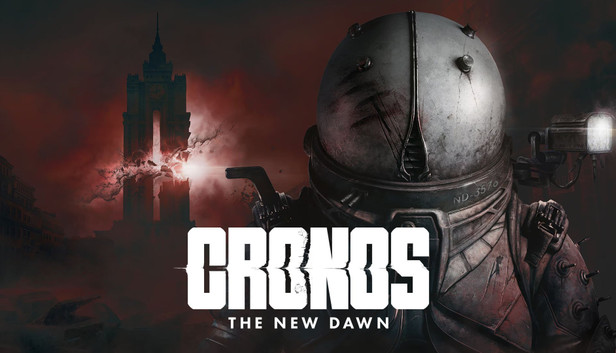
    So it is a genuine achievement that Cronos: The New Dawn absolutely nails this balance, giving me one of the most stressful survival-horror shooter experiences I’ve had since Resident Evil 2: Remake. The inventory size is just tight enough that you’re almost always making tough calls about what to bring with you when you leave the comfort of a safe zone. You always have either enough money to get those weapon upgrades you desperately need, or that ammo you might not be able to survive without. Even the times when you enter a combat encounter feeling well-stocked and ready to take on a legion of baddies, a few seconds in you’re left panicking. Every missed shot might as well have leapt out of the TV and hit you in the gut. The game simply works in the ways it gives you that sensation of always being on the knife’s edge, of never getting too comfortable. One of the most effective ways that Cronos makes you have to strategize is tied in to what some might call its primary “gimmick”.

    To give some context, the hordes of monsters you’ll be killing in this game are Dead Space necromorph adjacent creatures that are part of a shared collective mind: a massive hive of living flesh and memory that mindlessly devours all life it encounters. When you manage to down one of these creatures, tentacles amass around the corpse and tie it down, an eerie and almost protective gesture. Now, you might want to remember where that corpse is. Because the remaining enemies know, and they want it, they need the flesh and muscle of the lifeless body to be reintegrated, reabsorbed. The creatures will seek out the corpses of their fallen and unless you can interrupt them or burn the bodies, monsters will merge the dead creature into their own bodies and become significantly more dangerous, sometimes even gaining new abilities like hardened chitinous plating or the capability to spit acid. Flamethrower fuel is another resource you’ll always be hurting for, so there is a constant question of “Should I torch these bodies in case new enemies show up? Or should I just try to efficiently dispose of new threats before they can merge?”

    It’s a relentless threat, this ability of theirs. Monsters that do manage to merge can quickly overwhelm you if you’re not careful, their own resilience increasing in tandem with their ability to do harm. For what sounds like a simple trick, it’s remarkably effective in reinforcing the themes of the game’s narrative and the strategic aspects of the gameplay.

    To top that off, the game oozes a dark sci-fi atmosphere evocative of games like Dead Space, Callisto Protocol, and (oddly) Destiny. Unsettling gurgling comes from the sludgy masses of merged flesh around every corner. Bodies of enemies lie lifeless in the halls… until they get up. A pretty stellar soundtrack of eerie synths and haunting choral music heightens the experience by a wide margin, and we have a new entry on the list of all time great save room themes.

    Perhaps my favorite part of the game (and this will sound strange, I know) is the way that the protagonist moves. From the jump, you get the sense that this is a person whose sole motivation is the efficient and effective completion of their mission, so it is a great bit of characterization that they move stiffly, heavily, and when taking hits from big enemies the weight of their armored suit sends them stumbling awkwardly to the ground. The sound design emphasizes each gesture, each instance of your heavy boots hitting the concrete, the dirt, the muck. All of it sounds so weighty and full that you really get the feeling of being an armored soldier on the march through dangerous territory.

    It’s clear from Bloober Team’s history that they are big fans of survival-horror, and when fans of a thing make their own version of it results tend to vary widely. Speaking from experience, there’s a pretty big gap between loving a thing and understanding why and how it works. What’s also clear is that Bloober does understand why these games work on a design level.

    Perhaps the only real critiques I have are with the game’s story. While it starts out with a tantalizing air of mystery and terror, by the end I was starting to lose the plot a little. I stopped being able to follow what everyone was talking about, and a lot of the more intriguing aspects of the setting were sort of left behind, mostly ignored or backgrounded for the purpose of focusing on a tighter narrative about a few key characters. Unfortunately, I found the story to be oddly flat without these more interesting elements being in the forefront, and the ending to the game left me feeling a little disappointed, even though the final boss fight was very fun and flashy.

    Cronos: The New Dawn doesn’t manage to leave as strong of a lasting impression as I would’ve hoped for, but it’s a truly thrilling game to play that looks, sounds, and feels exactly the way it ought to, and should a sequel arrive in the future I know I’ll be there to take another dive.

  • Silent Hill f – Review

    Silent Hill f – Review

    LIGHT STORY AND MECHANICAL SPOILERS

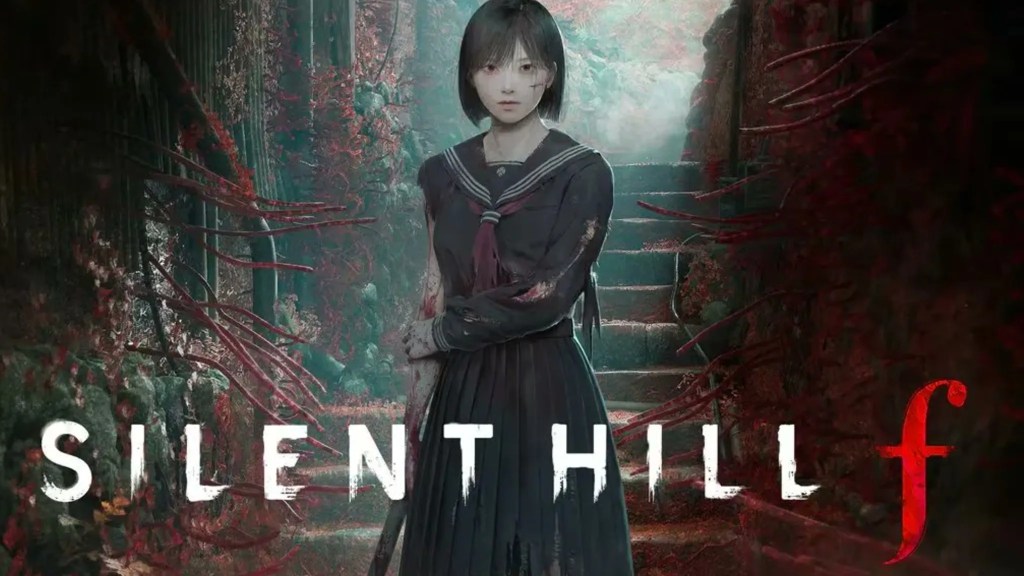
    I try to play more horror games around this time of year. I’m corny like that. Last year, I treated myself to my first ever foray into the world of Silent Hill by picking up the remaster of Silent Hill 2. What I found was not exactly what I hoped for, but in spite of my complaints I had a pretty great time with a classic of the genre, updated for popular modern tastes. I was familiar with the fan narrative of the franchise’s history: that the first couple games were good, but things spun off the rails after SH4: The Room, and with the cancellation of Del Toro and Kojima’s Silent Hills, people assumed the franchise was basically dead or at most treading water. With the renewed interest and the success of the remake, it made sense when Konami announced they were developing a brand-new entry in the series, one that would take a major aesthetic and thematic swing by being set not in America, but Japan, and 1960’s Japan to boot.

    I was intrigued.

    As soon as the game released, I was there. Lights off, headphones on. Here we go. Give me thrills and chills!

    And this game, my second Silent Hill experience… left me kind of cold.

    There are times when a piece of art makes us feel disappointed in ways we don’t really understand at first. We have to spend time talking about and thinking through our experience to fully grasp our feelings toward it, to figure out what didn’t work for us and why. With Silent Hill f, there was no mystery.

    It’s the combat. And by that I mean: it’s stupid. There are all of these mechanics to juggle: stamina meter, weapon durability, attack animation timings, range, speed, counters, dodges that feel like protagonist Hinako has learned Instant Transmission, perfect dodges resulting in slow-motion, a focus meter that lets you unleash a powerful special move, and a mountain of different items that have different effects on your health, stamina and sanity meters that are all kind of hard to distinguish as someone not immersed in Japanese culture. Hell, late in the game there’s an ultimate meter which builds to a transformation ability where you go berserk and become immune to damage while you unleash a flurry of unblockable strikes.

    Why is this here?

    Thematically, Silent Hill f is a game about gender and oppressive traditions, the ways we deny ourselves autonomy with strict adherence to custom. It’s a game about a young woman struggling desperately to carve her own path, beset on all sides by friends who harbor animosity towards her, abusive parents, and an older sister who she feels betrayed by ever since she went off and got married.

    So the combination of a dark, adult story with an objectively goofy, arcade-y combat system is so baffling as a design choice that it actively hurt my experience with the game throughout my entire playthrough.

    Since finishing the game, I’ve even felt the desire to return and finish the debatably mandatory New Game Plus content and get the other endings, but the thought of slogging through the sluggish and awkward combat, including boss fights that feel more in line with something from a From Software game, fills me with more dread than any of the horror in the game ever could.

    Ultimately, this dissonance between the story and gameplay (some might call this ludo-narrative dissonance) is irreparably harmful to the game, and leaves me puzzled as to why it was implemented this way. Did two separate studios develop these aspects of the game? Did no one talk? Is this somehow thematically relevant? Are we, like Hinako, torn between two realities and psychically torn in two by societal expectations, resulting in a game that is at times brilliant and at others so wildly atonal?

    The story content is intriguing, some of the set-pieces and scares are genuinely impressive, and the game is visually remarkable. The music which accompanies the wonky combat is chilling and distressing, deeply effective and it would be even more so if the combat weren’t so actively unenjoyable. It’s been over a week and I keep watching let’s plays, reading about the game and thinking through its story and visuals over and over. There is a scene in the game (for those of you who have played it, I’m referring to “The Ritual”) that is so disturbing and so stomach churningly dark that my eyes felt like they were about to leap from my skull and run for cover under my bed.

    And yet, I came away from Silent Hill f liking it, and wishing I’d loved it, but knowing that I simply could not have. While I think it’s worth playing, and at the very least worth watching someone else play, the frustrations I have with the combat simply cannot be ignored. If there are going to be more SH games in the near future, I’ll more than likely try them. Perhaps only to see if Konami, like me, wishes they’d gone another direction.