Category: Review

  • Absolum – Review

    Absolum – Review

    Rogue-likes have a certain kind of magic to their design: this stationary threat at the end of the road that sits, patient and menacing, for you to walk into its lair and claim victory over the game’s greatest challenge. The final boss in a rogue-like is often the thing you think about the most, and actually encounter the least. In a game like Nightreign, you plan which locations to strike and what kind of build to work toward based on your knowledge of the Nightlord you’ll be facing at the end of the cycle. In Hades, you repeat the path through the rest of the game so frequently and with such speed that you can reach a flow state wherein you start thinking less about what’s happening in the immediate present and more about how everything you’re doing is going to save or condemn you later on. Hades himself is at the end of the line no matter what, so it’s best to have a plan. Through a more narrative-centric lense, The Binding of Isaac puts the game’s primary antagonist not only at the heart of the game’s loop but at the heart of its story. Mom is a vicious, unpredictable threat in the literal text of the game and in the ways that the runs themselves are so incredibly chaotic and deadly.

    These are games that really test the player, forcing you to repeat sections over and over and over again, to grind your blade to dust against the bosses until you break through just once, then again, and then again to the point of it being a foregone conclusion. They are often brutally difficult and punishing to those who do not think tactically, but by necessity they need to be pleasant to look at, hear, and play because the nature of the game demands an incredible amount of repetition.

    So along comes Absolum, a fantasy beat’em up rogue-like from developer Dotemu, and a game that not only understands the concept of the “run”, but heightens the enjoyment of each run to a degree I haven’t felt in a long time within the genre.

    There is so much about this game that brings me immense joy, from the intense and driving soundtrack (with a few extremely catchy tracks), to the delightful aesthetic that calls to mind various fantasy comics and cartoons, and the deep wealth of randomized and systematized events which can curve a run in unique directions or give the player special goals to try and achieve.

    Perhaps most noteworthy is the option to use what is called the “Active Assist” mode. This function allows you to raise or lower the amount of damage each player both outputs and receives, meaning that if you just want to goof around and experience the story you can drop the threat all the way down to zero and just have fun. The game features online and couch co-op, and Active Assist can be set to effect the players to different degrees for a truly custom experience.

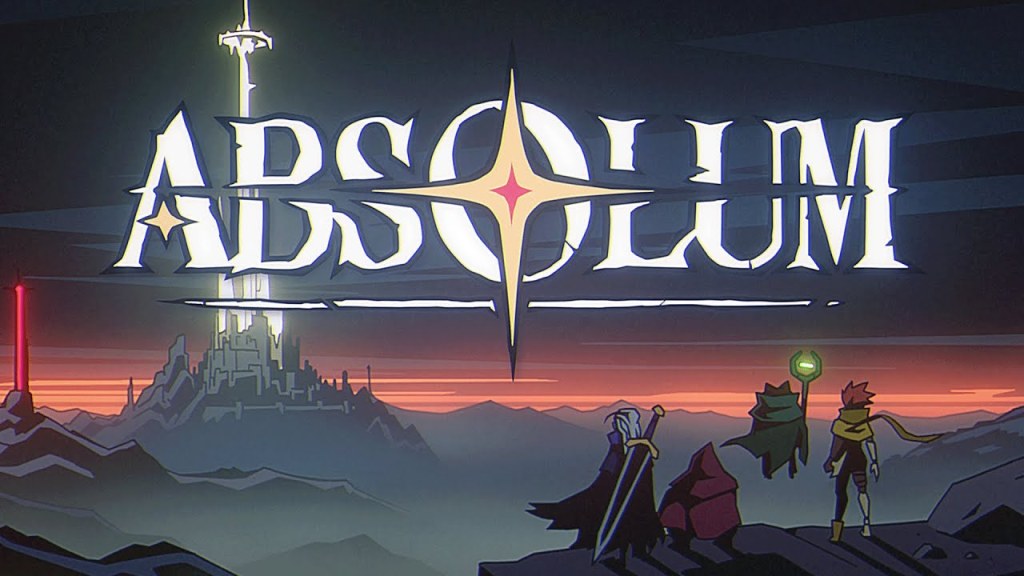
    Absolum takes place in a somewhat typical fantasy setting: a vast and magical land overtaken by the shadowy forces of an evil ruler, this time being Azra the Sun King. Each run, you pick from between your available characters, select a special move, and set off on a quest to defeat two of Azra’s top soldiers before storming the capitol. You know, assuming you make it that far.

    What makes each run special is the amount of variety. Not only are there multiple branching paths to take on your journey (the first phase of the game offers almost a dozen unique combinations of levels to reach the first major boss) but with subsequent runs, new paths will open up and new events will play out in levels you’ve already passed through. One of the early levels is a dense forest full of scarlet trees and a horde of goblins to fight your way past. Standard fare, yes, but once I’d gone through it two or three times, an NPC pointed out that a new path had been cleared away by some loggers and a secret level was unlocked. Excited and intrigued, I took that path and found an alternate route to the Underking, the first of Azra’s most loyal subjects. Pretty neat on its own, but what really sealed the deal was that when I came back on another run through the secret level, a new NPC appeared with a special side-quest that took us to new parts of the level with some fun secrets to be found.
    It was, in a word, delightful. And if I had to pick one word to describe this game, that’s what I’d go with: delightful.

    There are so many secrets to uncover, new characters to unlock, skills to master, alternate routes and random events that’ll mix things up in exciting ways. Perhaps most important for Dotemu to nail was the combat (I mean, it’s what you’re doing basically the entire time) and nail it they most certainly did. Combos flow nicely together and characters feel agile and strong. Launching enemies into the air before unleashing a series of aerial attacks makes you feel like a god. Gaining a power that spawns throwing daggers when you successfully deflect an enemy attack and then hurling those daggers at your foes like an M60 machine gun at full force is one of the greatest beat ‘em up experiences I’ve ever had. Take into account that the Active Assist function lets you increase and decrease the difficulty to fit your preferences and this game oozes satisfaction.

    Perhaps my only real criticism is that it is occasionally a little buggy. I encountered two rather nasty glitches in my time with the game, one being when a group of chickens launched my character into the air and suddenly the framerate dropped to about 2 per second and it couldn’t seem to recover. On another occasion, talking to one of my other characters in the game’s central hub opened a dialogue box that was completely empty and impossible to escape, resulting in me having to reload the game. I didn’t lose any progress, but I can’t shake the feeling that I might be missing out on one of the few hidden questlines I have yet to unlock.

    The few nitpicks really aren’t worthy of much discussion though. Playing this game co-op is a frenetic rush, and the pure tactile joy of fighting through hordes of enemies was enough to keep me coming back until I snagged that platinum trophy. Not to mention, the game is nowhere near the cost of big releases, so there’s really no excuse not to make what will likely make my top ten games of the year.

    Absolum is, in essence, the primary reason why we play games. It’s just so damn fun.
  • Cronos: The New Dawn – Review

    Cronos: The New Dawn – Review

    Survival-horror games live and die by the tightness of their balance. You can never have too many resources, too much ammo, or too many healing items. You need to be teetering on the edge of having nothing or having just barely enough to get through each area. Every encounter should have you tense, grappling with the stress of making every decision count for something, because a few wrong moves and it all comes crashing down around you.

    So it is a genuine achievement that Cronos: The New Dawn absolutely nails this balance, giving me one of the most stressful survival-horror shooter experiences I’ve had since Resident Evil 2: Remake. The inventory size is just tight enough that you’re almost always making tough calls about what to bring with you when you leave the comfort of a safe zone. You always have either enough money to get those weapon upgrades you desperately need, or that ammo you might not be able to survive without. Even the times when you enter a combat encounter feeling well-stocked and ready to take on a legion of baddies, a few seconds in you’re left panicking. Every missed shot might as well have leapt out of the TV and hit you in the gut. The game simply works in the ways it gives you that sensation of always being on the knife’s edge, of never getting too comfortable. One of the most effective ways that Cronos makes you have to strategize is tied in to what some might call its primary “gimmick”.

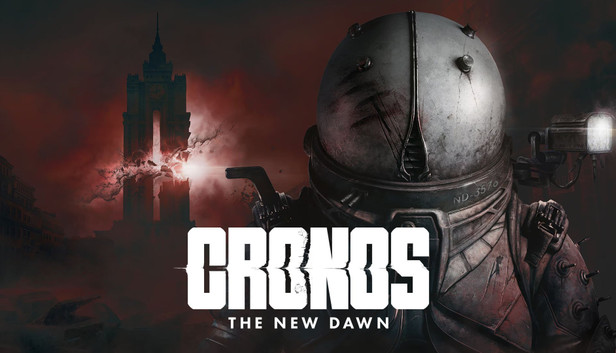
    To give some context, the hordes of monsters you’ll be killing in this game are Dead Space necromorph adjacent creatures that are part of a shared collective mind: a massive hive of living flesh and memory that mindlessly devours all life it encounters. When you manage to down one of these creatures, tentacles amass around the corpse and tie it down, an eerie and almost protective gesture. Now, you might want to remember where that corpse is. Because the remaining enemies know, and they want it, they need the flesh and muscle of the lifeless body to be reintegrated, reabsorbed. The creatures will seek out the corpses of their fallen and unless you can interrupt them or burn the bodies, monsters will merge the dead creature into their own bodies and become significantly more dangerous, sometimes even gaining new abilities like hardened chitinous plating or the capability to spit acid. Flamethrower fuel is another resource you’ll always be hurting for, so there is a constant question of “Should I torch these bodies in case new enemies show up? Or should I just try to efficiently dispose of new threats before they can merge?”

    It’s a relentless threat, this ability of theirs. Monsters that do manage to merge can quickly overwhelm you if you’re not careful, their own resilience increasing in tandem with their ability to do harm. For what sounds like a simple trick, it’s remarkably effective in reinforcing the themes of the game’s narrative and the strategic aspects of the gameplay.

    To top that off, the game oozes a dark sci-fi atmosphere evocative of games like Dead Space, Callisto Protocol, and (oddly) Destiny. Unsettling gurgling comes from the sludgy masses of merged flesh around every corner. Bodies of enemies lie lifeless in the halls… until they get up. A pretty stellar soundtrack of eerie synths and haunting choral music heightens the experience by a wide margin, and we have a new entry on the list of all time great save room themes.

    Perhaps my favorite part of the game (and this will sound strange, I know) is the way that the protagonist moves. From the jump, you get the sense that this is a person whose sole motivation is the efficient and effective completion of their mission, so it is a great bit of characterization that they move stiffly, heavily, and when taking hits from big enemies the weight of their armored suit sends them stumbling awkwardly to the ground. The sound design emphasizes each gesture, each instance of your heavy boots hitting the concrete, the dirt, the muck. All of it sounds so weighty and full that you really get the feeling of being an armored soldier on the march through dangerous territory.

    It’s clear from Bloober Team’s history that they are big fans of survival-horror, and when fans of a thing make their own version of it results tend to vary widely. Speaking from experience, there’s a pretty big gap between loving a thing and understanding why and how it works. What’s also clear is that Bloober does understand why these games work on a design level.

    Perhaps the only real critiques I have are with the game’s story. While it starts out with a tantalizing air of mystery and terror, by the end I was starting to lose the plot a little. I stopped being able to follow what everyone was talking about, and a lot of the more intriguing aspects of the setting were sort of left behind, mostly ignored or backgrounded for the purpose of focusing on a tighter narrative about a few key characters. Unfortunately, I found the story to be oddly flat without these more interesting elements being in the forefront, and the ending to the game left me feeling a little disappointed, even though the final boss fight was very fun and flashy.

    Cronos: The New Dawn doesn’t manage to leave as strong of a lasting impression as I would’ve hoped for, but it’s a truly thrilling game to play that looks, sounds, and feels exactly the way it ought to, and should a sequel arrive in the future I know I’ll be there to take another dive.

  • Silent Hill f – Review

    Silent Hill f – Review

    LIGHT STORY AND MECHANICAL SPOILERS

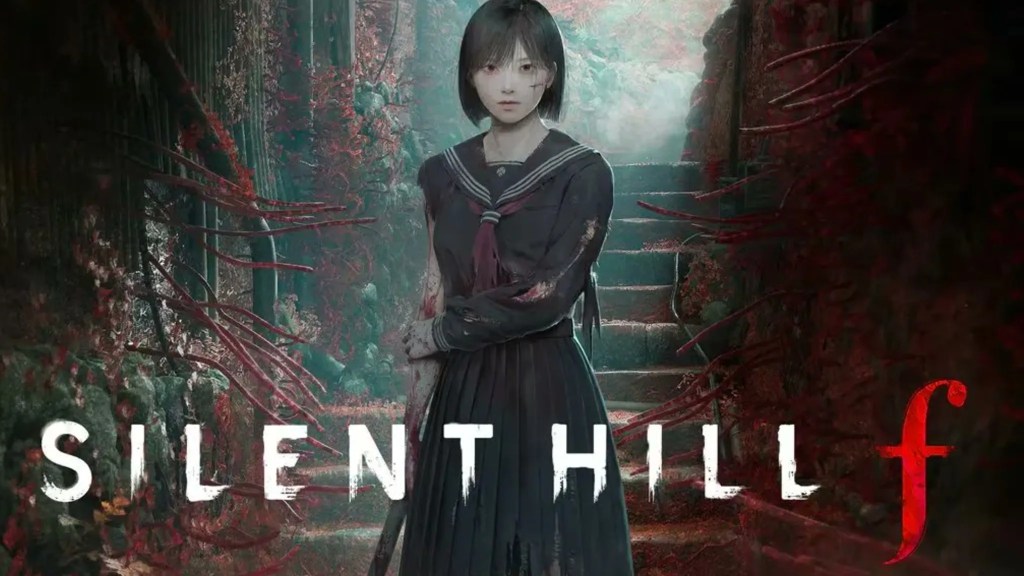
    I try to play more horror games around this time of year. I’m corny like that. Last year, I treated myself to my first ever foray into the world of Silent Hill by picking up the remaster of Silent Hill 2. What I found was not exactly what I hoped for, but in spite of my complaints I had a pretty great time with a classic of the genre, updated for popular modern tastes. I was familiar with the fan narrative of the franchise’s history: that the first couple games were good, but things spun off the rails after SH4: The Room, and with the cancellation of Del Toro and Kojima’s Silent Hills, people assumed the franchise was basically dead or at most treading water. With the renewed interest and the success of the remake, it made sense when Konami announced they were developing a brand-new entry in the series, one that would take a major aesthetic and thematic swing by being set not in America, but Japan, and 1960’s Japan to boot.

    I was intrigued.

    As soon as the game released, I was there. Lights off, headphones on. Here we go. Give me thrills and chills!

    And this game, my second Silent Hill experience… left me kind of cold.

    There are times when a piece of art makes us feel disappointed in ways we don’t really understand at first. We have to spend time talking about and thinking through our experience to fully grasp our feelings toward it, to figure out what didn’t work for us and why. With Silent Hill f, there was no mystery.

    It’s the combat. And by that I mean: it’s stupid. There are all of these mechanics to juggle: stamina meter, weapon durability, attack animation timings, range, speed, counters, dodges that feel like protagonist Hinako has learned Instant Transmission, perfect dodges resulting in slow-motion, a focus meter that lets you unleash a powerful special move, and a mountain of different items that have different effects on your health, stamina and sanity meters that are all kind of hard to distinguish as someone not immersed in Japanese culture. Hell, late in the game there’s an ultimate meter which builds to a transformation ability where you go berserk and become immune to damage while you unleash a flurry of unblockable strikes.

    Why is this here?

    Thematically, Silent Hill f is a game about gender and oppressive traditions, the ways we deny ourselves autonomy with strict adherence to custom. It’s a game about a young woman struggling desperately to carve her own path, beset on all sides by friends who harbor animosity towards her, abusive parents, and an older sister who she feels betrayed by ever since she went off and got married.

    So the combination of a dark, adult story with an objectively goofy, arcade-y combat system is so baffling as a design choice that it actively hurt my experience with the game throughout my entire playthrough.

    Since finishing the game, I’ve even felt the desire to return and finish the debatably mandatory New Game Plus content and get the other endings, but the thought of slogging through the sluggish and awkward combat, including boss fights that feel more in line with something from a From Software game, fills me with more dread than any of the horror in the game ever could.

    Ultimately, this dissonance between the story and gameplay (some might call this ludo-narrative dissonance) is irreparably harmful to the game, and leaves me puzzled as to why it was implemented this way. Did two separate studios develop these aspects of the game? Did no one talk? Is this somehow thematically relevant? Are we, like Hinako, torn between two realities and psychically torn in two by societal expectations, resulting in a game that is at times brilliant and at others so wildly atonal?

    The story content is intriguing, some of the set-pieces and scares are genuinely impressive, and the game is visually remarkable. The music which accompanies the wonky combat is chilling and distressing, deeply effective and it would be even more so if the combat weren’t so actively unenjoyable. It’s been over a week and I keep watching let’s plays, reading about the game and thinking through its story and visuals over and over. There is a scene in the game (for those of you who have played it, I’m referring to “The Ritual”) that is so disturbing and so stomach churningly dark that my eyes felt like they were about to leap from my skull and run for cover under my bed.

    And yet, I came away from Silent Hill f liking it, and wishing I’d loved it, but knowing that I simply could not have. While I think it’s worth playing, and at the very least worth watching someone else play, the frustrations I have with the combat simply cannot be ignored. If there are going to be more SH games in the near future, I’ll more than likely try them. Perhaps only to see if Konami, like me, wishes they’d gone another direction.

  • Sword of the Sea – Review

    Sword of the Sea – Review

    One of the most important factors in my enjoyment of a game tends to be how it feels to move around. Perhaps my biggest criticism against Dark Souls II is how floaty and weightless everything feels whereas you would expect a warrior in metal armor with a stupidly large sword to trudge and lumber around. Playing Destiny feels smooth and the added movement options allow you to elegantly leap and glide around the battlefield like an angel of death. Monster Hunter Wilds gives you what is essentially an auto-pilot capable raptor mount that can climb, leap, and sprint across the wide-open spaces and navigate cave systems with impeccable ease, but dismounting changes your movement style to be slow and heavy yet more precise, perfect for facing down giant monsters in highly technical combat with hard-hitting attacks. And who could forget the heaving, struggling, gratifying feeling of scaling cliffs in Breath of the Wild?

    Keep this in mind when I tell you the pitch for Giant Squid’s Sword of the Sea: “What if Journey was a game about hover-boarding?”

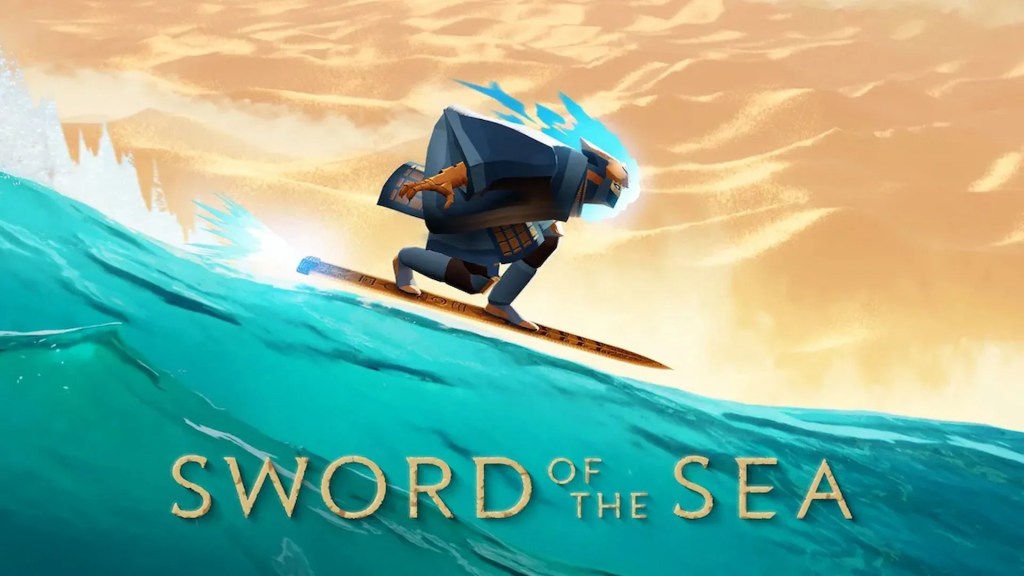
    It’s no surprise that this particular developer would produce a game which draws so heavily on the aesthetics of Journey and their previous game, Abzu, combining the two almost literally in many cases. You play as the Wraith, a being of mysterious origin and granted with a powerful hoverblade (you read that right) that allows them to glide over the vast desert or snowfields while also slicing apart obstacles. As the game progresses, you transform the various environments into a roiling ocean, schools of fish and pods of whales springing up from beneath the earth and taking… flight?

    Confusing physics aside, the game is visually stunning in ways that are both familiar for the developers’ previous works, and altogether new and creative. The final two chapters of the game in particular were a feast for the eyes: glittering starscapes and lakes of blazing magma that are beautiful to the point of tears and treacherous to cross respectively.

    Equally impressive is Austin Wintory’s score, sweeping and glorious like his work on Journey, giving what might otherwise seem a little sillier of a gameplay experience an air of majesty.

    Similar to Journey, the threats you encounter are… alright, how much longer am I going to do this? I can’t just keep comparing it to Journey but… I mean, come on, it’s so similar! The way the story is presented through records from ages past, the dusty desert ruins decorated with similar deep red rugs which sway in the wind. Giant serpentine creatures of stone and fire are your adversary, and a silent protagonist is joined by a silent companion (although this time it’s a character and not an interesting form of ambient multiplayer). Furthermore, the game seems similarly fixated on aesthetic references to another past game, Abzu, what with all the fish that come blossoming into existence whenever you open a new path. Sword of the Sea even features the same secret shell collectibles from Abzu. Upon discovery of this fact, I said aloud, “Oh… again?”

    So, with a game that’s seemingly unable to move on from the developer’s past projects, can it really stand on its own? How can it establish its own identity?

    Because hoverboarding over deserts, tundras, and magma lakes looks and feels fucking awesome.

    And that’s honestly enough to make this game stand out among its peers, because where Abzu and Journey were meditative and slow with occasional bursts of excitement, Sword of the Sea feels exhilarating from start to finish. Even when things take a more contemplative turn, you’re still zipping around these massive spaces, grinding on rails, riding the walls, and doing all manner of flips and jumps to collect Tetra (the game’s currency which you use to unlock new abilities) and secret shells. If you spot a little crevice in the distance, you think might have a secret, you simply zip over and check it out, and most of the time you’ll be rewarded for exploring.

    There’s also a lot more spectacle here. The final chapters of this game leave me breathless, even on repeat playthroughs. And yes, I played through multiple times. In an age of loot boxes, card packs, and daily quest grinds, there is something remarkable about playing a game over and over simply because it feels good. And Sword of the Sea feels so good that I’ll probably play it a few more times, will likely even go for the platinum trophy.

    You can finish the game in a few hours, so I encourage you to take an afternoon or evening where the weather sucks and the blankets are clean and cozy, and get transported to the rolling dunes and gorgeous seascapes of this little adventure that leaves a big impact. In a world that demands so much of your time, nothing about my time with Sword of the Sea felt wasted.

    Giant Squid: What else ya got cookin’?

    Update: Between the time of writing and the time of editing, I have – in fact – acquired the platinum trophy. Game good.

  • Elden Ring: Nightreign – Review

    Elden Ring: Nightreign – Review

    You have played Elden Ring. You know the score. This is different, that much is obvious, but Elden Ring is in the name! It can’t be that hard to adjust, and you’ve played the other Soulsborne games. You pick a character based on a build style you’re familiar with and begin.

    Then you soar through the air on a spectral bird, drop into Limveld from an obscene height, and the chaos begins.

    Your party members go running off, seeming to execute complex mathematics in their heads as they go. The truth is, they know the score. You’re the newbie. You’re just along for the ride. You follow, getting used to the slightly tweaked controls, the speed of the new sprint feature, maybe you take some time to fiddle with your character’s unique skills. Perhaps you chose the Wylder, with his greatsword, his grappling hook and his all-around playstyle. Or maybe you wanted to try your hand at the easy to learn, difficult to master Recluse, with her recharging FP and her powerful elemental spells that rely on careful planning and memorization. No matter which Nightfarer you chose for your first run, you will quickly realize, just from watching your allies play, that each one of them is technically complex and surprising in how unique their identities are.

    Runes start pouring in and it becomes clear that you are being carried. You scoff. You’re the expert here, right? You leap into the fray. Enemies you recognize rush you in mobs and you take a couple hits but you come back swinging. “Alright,” you say to yourself. “I can do this! Just need some time to adjust.” This has happened throughout the franchise! Each entry is just different enough to feel familiar but a little disorienting. But those were all hurdles you overcame in a matter of minutes, hours at most!

    Your party is gone again, already rushing to their next target while you’re stuck trying to decipher which rewards you should be choosing, struggling with incomplete context. You try your best to make value judgments knowing you might not get another chance to take the rewards you don’t pick.

    The storm begins to close in. A lot faster than you expected. Man, this game is paced really fast! Kind of hard to keep up, especially when Souls games tend to be slow marches through dangerous, hand-crafted levels. This feels so much more chaotic, so much more hurried and frantic. Your party is launching spells, wielding weapons you vaguely recognize but with new abilities.

    And now it’s time to face your first boss, and like the weapons, items, and other enemies in the game you recognize this one too! Alright, you take a few licks, get downed once… maybe twice. But your party members seem to have a grip on the situation and you prevail. A big boost in runes and a handy buff come your way, or perhaps a new weapon.

    Then Day Two comes.

    Far more dangerous enemies (which were there before but are now marked on your map) seem to draw your party’s attention and you struggle through some challenging fights. You visit a few more areas, some ruins themed around a certain damage type/status effect, Limveld’s central feature: a castle with two powerful bosses and a bunch of high level enemies. The runes come flooding in and you watch your level climb up over ten and closer to the maximum level of fifteen. You’re beginning to truly grasp the flow of the game, this deadly rhythm of efficiently hunting the enemies most likely to provide more runes and better drops. You’re assembling an arsenal of powerful weapons, many of them carrying passive buffs that benefit you in one way or another simply by being in your inventory.

    Another boss encounter, this one much harder and the fight is won only through determination and a quick study of the enemy’s abilities. You drain every last flask you have, expend your consumables, get downed and get back up with a vengeance.

    Then the final stage begins. You are teleported to a small chamber free of threats. You have one last opportunity to level up, maybe purchase a few items that will help you in what’s coming (if anything can help).

    The door opens once your party is assembled. It’s your first, truly devastating encounter and it seems like victory is unattainable. You’ve used your items, you’ve been downed and revived twice now, and you realize that your build just simply isn’t up to par.

    And if you’re anything like me, you fail. It’s back to the beginning, but not without anything gained. The game gives you Relics, which can be applied to your Nightfarers and provide passive buffs and subtle (or sometimes significant) changes to the way they play. You realize how staggeringly little you understand about this game, despite having played From Software’s RPGs going back over a decade.

    In many ways, Elden Ring: Nightreign is a familiar beast. Many series staples are present, and the use of classic bosses means you have a shot at beating many of these on your first try if your memories of battles past are intact, the timing of dodges and opportunities to retaliate deeply ingrained in the deft movements of your hands.

    Yet the game is also shockingly unique when compared to other entries, not only for its multiplayer focus but the way it seems to grasp on to many modern conventions of games like Apex Legends and Fortnite, and somehow put them all to shame with the way it executes them with that classic combo of design genius and From Software jank.

    Not to mention, that familiar hook has already sunk deep beneath your skin and right into your brain. Ever since the first boss encounter way back in Demons’ Souls, that same psychological trap has been there, lying dormant until the next boss, and the next one, and the next one after that. In some ways, it’s an old friend.

    You bet you can beat it next time.

  • Despelote – Review

    Despelote – Review

    How does one review someone else’s childhood? This is the task presented to me now, having finished Julián Cordero and Sebastian Valbuená’s indie hit, Despelote, a game which tells a slightly re-imagined version of Cordero’s own childhood living in Ecuador during a time of great political and economic strife, which also happened to be a period in which the country’s national identity was bolstered by their football team’s chances at qualifying for the World Cup for the first time in history. This became a unifying event that captured the attention of Ecuador’s people and culture, giving them hope and joy in a time where it seemed (to hear Cordero tell it) in short supply.

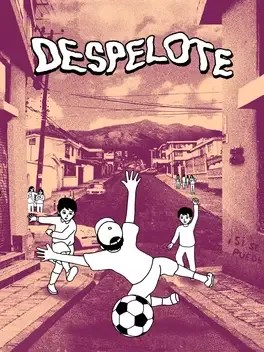
    Immediately, I was captivated by the game’s art style: a strange and yet comforting mix of photo-realism and black and white cartoonism that not only helps to distinguish which objects are ones you can interact with but also gives the game a unique visual charm that I’ve never encountered before. There is something intimidating about the towering, colorless structures surrounding young Julián, especially since they are presented from the eyes (read: height) of an eight year old boy, but the warm smiles and kind voices of his family, classmates, and various locals around him slip over the experience like a blanket.

    The audio of Despelote has a similar quality, with voices speaking authentic Spanish and always sounding natural and close, and with the ambiance of the city’s environments feeling deeply personal and immersive. There are times when it truly felt that I was looking out from Julián’s eyes at a world just as real as the one I inhabit, a feeling that whenever it is encountered in games I consider it to be both astonishing and deeply moving.

    And the primary mode of interaction with the game, fittingly, is kicking a soccer ball around, whether its playing with your friends in the schoolyard, exploring the local park and getting into mischief against your mother’s warnings, or playing a beloved video game that everyone seems bound and determined to shut off when you’re in the middle of a match. Man, every kid went through this, huh?

    But how does one, review this game in the sense that one assigns quantifiable virtues/flaws to it, the way most reviews are written? How does one give it some kind of qualitative statement that wraps it in a bow as being either a good game or a bad one, a game worth your money or not? It’s a difficult question because the game is so personal, so closely wrapped up in the lives of real people with real experiences, that the lines between the game and reality are so blurred as to become transparent at times.

    I don’t think I can say that the game is good or bad. I can say I had a good time with it, and I certainly did. An incredible time, really, one that was meaningful in ways I’m not sure I understand fully, the same way that it is generally meaningful to connect with people, to hear their stories, to tease at the lines that divide us and realize how illusory they really are.

    I suppose, what I can say, is that Despelote is authentic and heartfelt in a way that an increasingly corporate world seems ill at odds to handle. And, like my own blurred memories of childhood, it will remain with me for a very long time.

  • Clair Obscur: Expedition 33 Review

    Clair Obscur: Expedition 33 Review

    Some games, particularly those in the RPG genre, take their time to really get the player invested. The worlds can feel so dauntingly large, the number of new proper nouns to learn can leave one confused and turned off. In some cases, whole chunks of the mechanical structure of a game can be locked off until several hours in, and narratives can take their sweet ass time to really get going. It’s so common, that there is a well-known joke in the games community that goes, “the game gets good after x hours” and usually that x is a number in the double digits.

    In Sandfall Interactive’s Clair Obscur: Expedition 33, there was no need to wait, no toughing it out for the good stuff. Within the first 15 minutes, I was deeply intrigued by the setting, invested in the characters’ to the point of deep, gasping sobs when things turned to tragedy, and fully locked in on the satisfying and technically dense combat. It’s been a long time since a game had me so hooked so early on, that I knew immediately that I was going to see this one to the end.

    And I did! Here I am, many hours later with the platinum trophy and enough thoughts to write a whole book on this game, though – for now – I will stick to just this simple essay.

    This will be a spoiler free review, but if you want to go in completely blind I will say these things up front.

    Should you purchase Clair Obscur: Expedition 33? Yes.

    Should you finish Clair Obscur: Expedition 33? Yes.

    Is Clair Obscur: Expedition 33 my current pick for Game of the Year? Absolutely.

    From its opening moments the game’s music, visuals, writing, and voice acting are top-of-the-line. Themes of decay, loss, and perseverance in the face of impossible odds weave elegantly into ideas around child-rearing in a world that will not be able to support future generations. Existential dread is the name of the game here, and yet somehow the characters and the writers of the game find time for some of the most hilarious lines I’ve encountered in an RPG.

    Each character feels has a distinct personality and look which gives the player an immediate sense of their identity, and they are complex and well-realized characters with differing motivations and ideas on the nature of life and the struggles therein. And they somehow all find time to crack jokes, to be intimate with one another, to express doubt, fear, and admiration. To look at the terrors they face with a deeply human combination of abject horror and profound amazement.

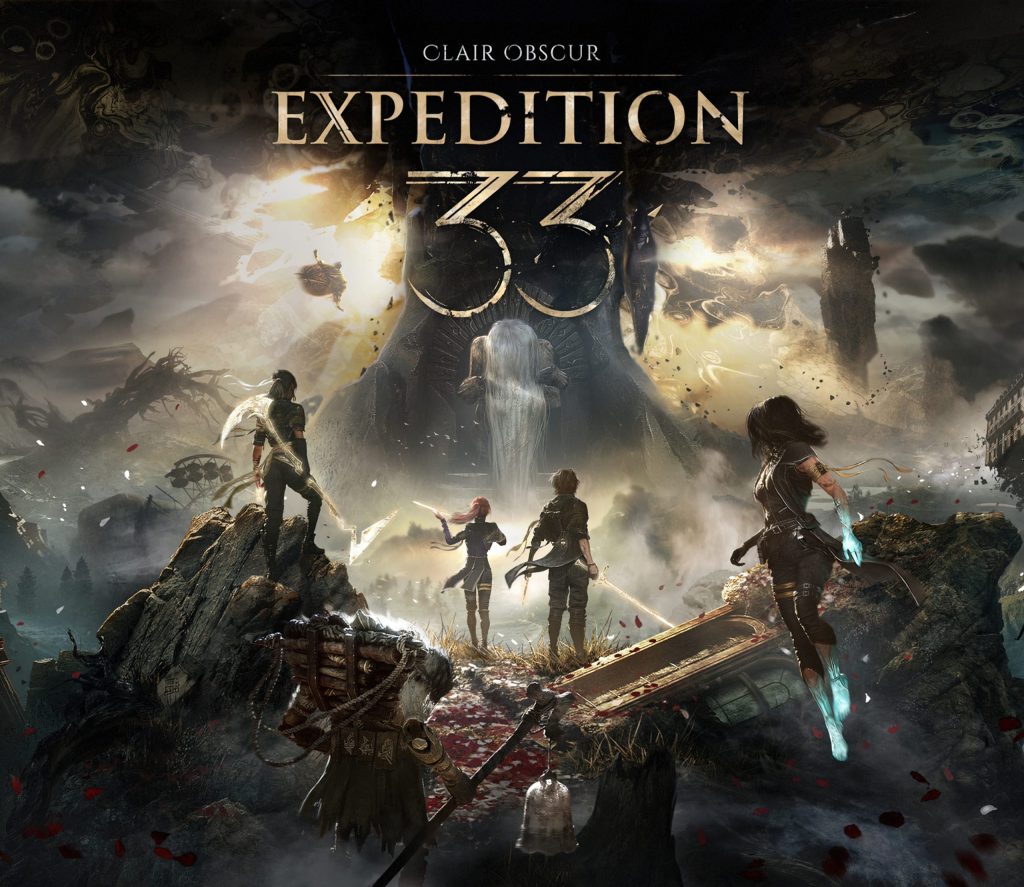
    To put forth the very basic premise of the game, Clair Obscur takes place in a world that was literally fractured: broken into chunks with the land scattered apart and many people left dead or utterly at a loss as to the cause of this calamity. Furthermore, there now stands a great monolith at the far edge of the horizon, impossibly visible from the distant city of Lumiere, where our story begins, and at its base sits a weeping, huddled figure known only as The Paintress. Above her, luminous as the sun, is the number 33.

    This number, as we soon come to realize, refers to a sort of literal deadline for human life. Every year, like some grim holiday, the Paintress paints a new number, sequentially moving downward towards 0, and anyone whose lifespan has passed this limit is near-instantly killed, dissolved into withering flower petals in a process called, gommage (a real life practice of removing dead skin cells). The true terror of this premise is twofold.

    One, every human being knows exactly how long their life has the potential to be.

    And two…

    That number is getting smaller.

    It is an incredible premise, and everything in the first few minutes of the game solidifies the tragedy and complexity of a world living under such bleak and absolute tyranny, exploring the painful realities of child-rearing in a doomed world, questions many of us in our own dying world often come to grips with.

    And it’s only the beginning of this game’s astounding journey, one that is beautiful both in its narrative content, its presentation, and its mechanical cohesion, because Clair Obscur is not only deeply engaging in terms of its story, but in the gameplay as well.

    The game’s combat starts simple: it’s turn-based with a dodge mechanic during enemy attacks that lets you evade incoming damage entirely, or a more precise parry that can result in a powerful counterattack, creating an effective risk vs reward scenario during every enemy turn that never stops being engaging. Add in a light bit of resource management (balancing usage and creation of AP – action points – to use special abilities or fire off ranged attacks to pick at an enemy’s weakness or deal that last little bit of damage to finish them off.

    Right from the outset this is an effective system that keeps the fights interesting and tempts you with that ever-present challenge: “Can I do this without getting hit a single time?” The answer, for every fight in the game’s lengthy runtime, is an emphatic yes. The timing can get tricky, but once you start to internalize the patterns of your enemies’ attacks, the momentum of a fight can shift dramatically in your favor.

    That’s barely scratching the surface.

    Because for all of its many, MANY wonderful aspects, Clair Obscur’s gameplay is primarily focused on the many additional layers to the combat which get added as the game progresses.

    First off, each member of your party has an entirely unique set of skills, weapons (each with unique passive buffs and traits) and equipable powers from the game’s Pictos, which require a limited resource to equip and grant passive or active bonuses and tweaks to the way your characters play. Essentially, these work like badges from the old Paper Mario games, and if you aren’t familiar with those, come back once you’ve played them, you rube. These all combine to give the player a staggering degree of control and depth, creating unique builds which are fun to poke around with and fine tune as the game progresses and more choices become available. The combat becomes so deep that it can start to feel intimidating, and the admittedly poor UI design doesn’t do much to help in that regard. However, mastering the dodges and parries can allow you to brute force your way through combat where your constructed builds aren’t working, and you have an enormous amount of freedom and opportunities to undo potential mistakes in your characters’ advancement.

    Not only that, but each character plays so distinctly from the others, with unique mechanics and specialties. These make them stand out not only in a narrative sense, but in the way they interact with the change how you think about their turns and how they work in tandem with your other party members. This does a lot to foster strong feelings of attachment to your the characters, because not only are they interesting in the way they are presented through writing, visual design, and voice work, but in the way they play to certain strengths and weaknesses.

    For example, the first party member you get is presented as being analogous to a mage in a more traditional fantasy setting (she even floats rather than walking when outside of combat). Suitably, her abilities are all about elemental attacks that can chain together with the elements you’ve used in previous turns to unleash even more devastating attacks or to grant buffs and debuffs that can change the course of a battle in an instant.

    And you can create some seriously incredible combos to deal astronomical amounts of damage. A guide online taught me how to construct three characters to work in tandem so that the game’s most powerful optional boss can be defeated in a mere TWO HITS.

    Incredible.

    I could easily go on for several thousand words about why Clair Obscur’s story and themes are so incredibly well-explored, so powerful and meaningful, so evocative and brilliant and tragic and beautiful…

    But that would be so full of spoilers as to ruin it for those of you that are sensitive to such things, so I will refrain. I will simply leave you with the way I felt upon reaching the credits of Clair Obscur.

    My god. I’ve just finished one of the best games I’ve ever played.

  • Blue Prince Review

    Blue Prince Review

    Blue Prince is a puzzle game, with a wide-range of complexity from puzzles for dumb-dumbs (see author) and puzzles so mind-numbingly complicated that this reviewers shamelessly referred to online guides on multiple occasions. They test your memory, your observation skills, mathematics, logical deduction, strategic decision making and resource management. It is a game that rewards a slow and thoughtful approach, with tons of secrets to uncover.

    And…

    Blue Prince is a rogue-lite game about exploring a vast and ever-changing estate with the singular goal of reaching the fabled Room 46. You can achieve this goal using various methods, some of which are likely to reveal themselves only after several hours of playing. No one method locks you out of another. Stuck trying to get there one way? There’s many more options available, many paths to take with different challenges that test you in different ways. Sometimes the RNG will work to your favor. Other times it won’t. But, look carefully. You didn’t get the room you wanted, but maybe… maybe you got the room you need.

    And…

    Blue Prince is a deck-building card game in which you must balance your knowledge of the deck with the physical layouts and mechanical properties of each room card. Knowing which rooms are more likely to have certain tools/treasures/keys can be the secret to saving a doomed run and breaking through more narrative, more puzzles, and finally reaching Room 46.

    And…

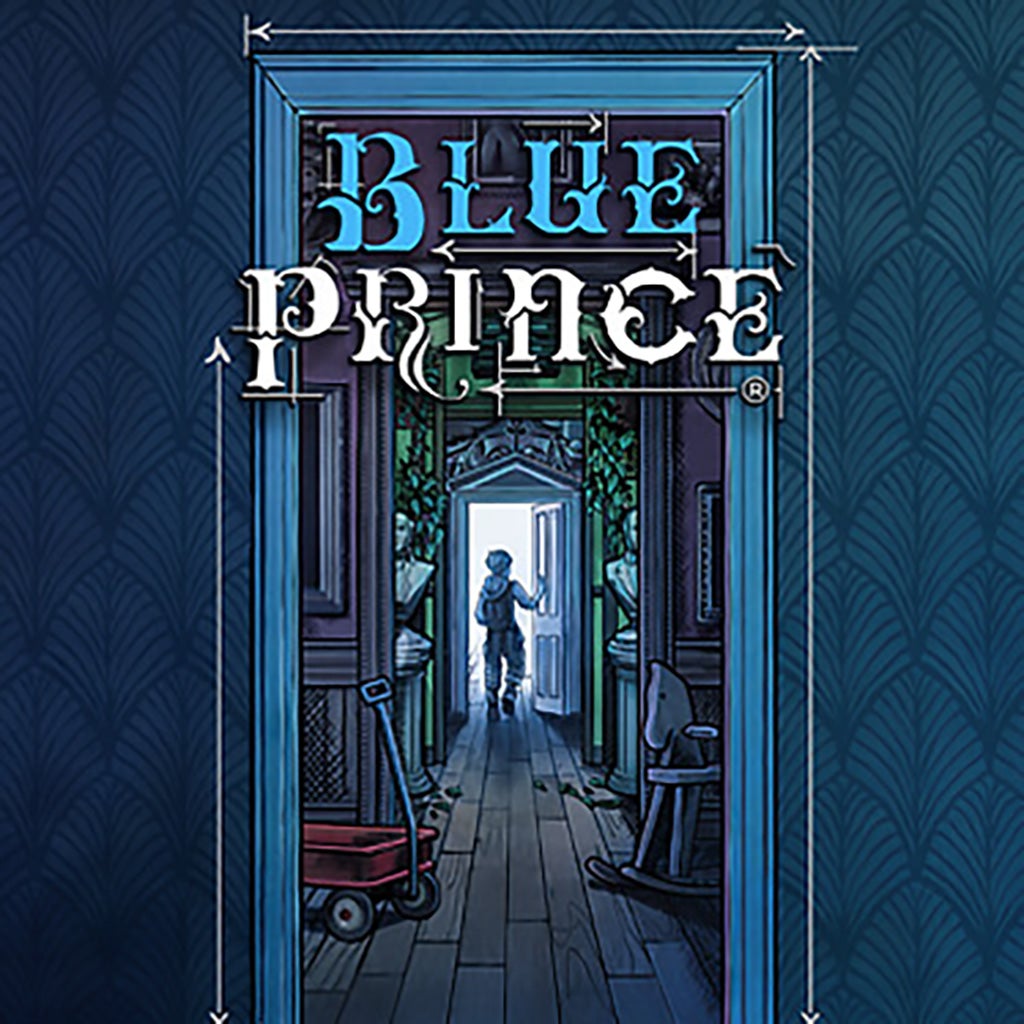
    Blue Prince is a narrative game a la Firewatch or (perhaps more closely related) Gone Home. In it, you play as Simon P. Jones, grand-nephew to the recently passed Baron Herbert Sinclair, head of the Synka Corporation and owner of the enchanted and remote Mount Holly Estate. You are summoned to this estate via letter, and tasked by your deceased great-uncle to find the elusive 46th Room and learn the power of drafting: the creation and arrangement of rooms pulling from a predetermined pool. Should you manage to succeed, you stand to inherit the estate, the title of Baron, and all the wealth of the powerful Synka Corporation. But the story is not Simon’s alone, for as you dig through the many secrets and puzzles on offer, you find letters, clues, diary entries and memos left behind, all of which tell a complicated tale of your family’s tragic history, of love lost and lives left shattered, of authoritarian regimes and the ways in which they rewrite history and control information to serve their ends, and of a mother young Simon never got the chance to really know, until now, through the medium of her words, and the unshakable ideals which cost her everything.

    Blue Prince is an astounding work of game design from top to bottom. From narrative presentation and some of the hands-down best god damned writing to be found in games, to one of the more engaging puzzle games I’ve played in my entire history with the medium. It touts incredible music, visual design, and mechanical elegance. It has many fun and challenging side-objectives to complete entirely for the fun of having done so, and it is FUN.

    And…

    Blue Prince is my current contender for Game of the Year.